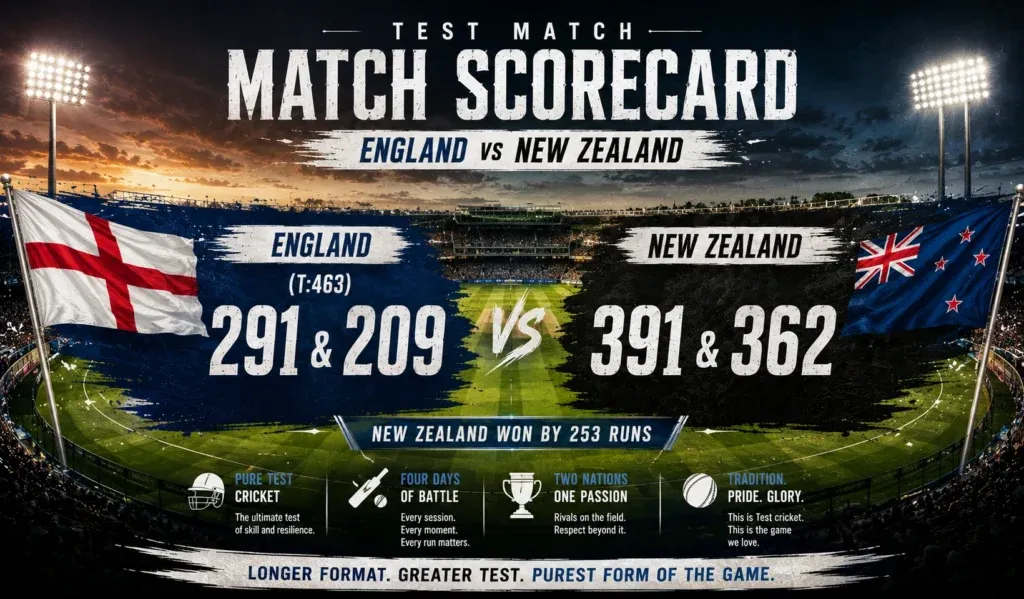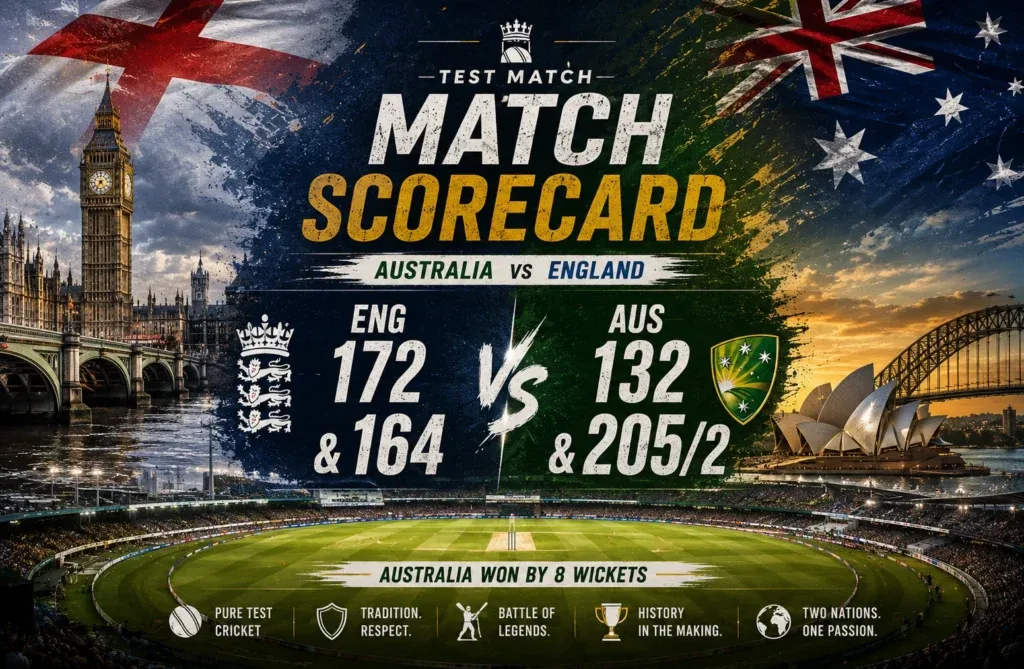
Test cricket scorecards contain much more information than simple innings totals. Fans visiting cricketmatchteam.com can use scorecard details to follow batting performances, bowling spells, partnerships, and changes throughout a long match. Test cricket has a different rhythm compared with shorter formats. Teams have more time to build innings, recover from difficult situations, and create pressure through patient bowling. A scorecard helps readers understand these developments without depending entirely on live commentary.
A Test match can continue across five scheduled days, although some games finish earlier. Each team normally receives two innings, which means the scorecard can become quite detailed. Readers may see four innings, several batting partnerships, long bowling spells, and different match situations on the same page. Understanding how these figures connect makes the match easier to follow.
Why Test Scores Look Different
Test cricket allows teams to approach batting with different plans. Some batters focus on protecting their wickets and staying at the crease for long periods. Others look for scoring opportunities whenever the bowlers provide loose deliveries. The scorecard records the result of these different approaches through runs, balls faced, boundaries, and dismissal details.
A team total of 320 may appear strong in one match and ordinary in another. The pitch, weather, opposition bowling, and match situation all influence the value of that score. A difficult batting surface can make a moderate total extremely important. A flat surface may allow teams to score much more comfortably.
Test scorecards also show how many wickets have fallen. Losing two wickets while scoring 250 can indicate a stable innings. Reaching the same total after losing eight wickets suggests a very different situation. The runs alone cannot explain the complete batting performance.
Overs provide another useful measurement. They show how long the batting side remained at the crease and how much bowling work the opposition completed. A team scoring 250 in fifty overs has played differently from a team reaching that total after ninety overs.
Reading The Four Innings
A standard Test match provides two innings to each team. The scorecard may therefore display the first innings and second innings separately. Readers should check the innings labels before comparing the totals. This small habit prevents many common misunderstandings.
The first innings often establishes the initial match position. One team bats while the opposition attempts to restrict the total. After the first side is dismissed or declares, the other team begins its first innings. The scorecard then records the second team’s response.
Once both first innings finish, the match moves into the second innings. The team batting first may bat again or the opposing team may continue depending on the scores. The innings sequence can sometimes look confusing to new readers. Checking the team names and innings headings makes the order easier to understand.
Some scorecards display a follow-on situation. This can happen when one team leads by the required margin after the first innings. The team batting second may be asked to bat again immediately under the applicable playing conditions. Readers should check the match rules before assuming that the normal innings order will continue.
Understanding Batting Time
Balls faced provide useful context for Test batting performances. A batter scoring 80 runs from 150 balls has occupied the crease for a considerable period. Another player scoring 80 from 70 balls has made runs much faster. Both contributions can be valuable, depending on the match situation.
Batting time can matter because Test cricket rewards patience and concentration. A long innings may tire the bowlers and reduce the opposition’s opportunities. It can also allow teammates to settle before attempting more attacking shots.
Strike rate appears on many Test scorecards, although it should not be treated like a limited-overs requirement. A lower strike rate does not automatically mean poor batting. A player defending difficult deliveries on a moving pitch may be performing an important role.
The number of boundaries also gives additional information. A batter hitting twelve fours and one six has collected many runs through boundary scoring. Another batter may have reached the same total through singles and doubles. These different methods can influence how the innings developed.
Bowling Figures Over Long Spells
Test bowlers often deliver long spells across several sessions. Their scorecard figures can therefore provide a useful view of workload and control. Overs, maidens, runs conceded, and wickets taken are commonly displayed together.
A bowler completing thirty overs has delivered a substantial amount of work. If the bowler concedes seventy-five runs and takes three wickets, the figures show both control and wicket-taking ability. However, the pitch and opposition batting quality should also be considered.
Maidens are particularly useful in Test cricket. They indicate overs during which the batting team scored no runs against the bowler. Several maiden overs can create pressure, especially when the fielding side maintains accurate line and length.
Some bowlers take wickets through sustained pressure rather than constant attacking deliveries. Their figures may look ordinary during the first session before becoming more important later. Readers should avoid judging a complete bowling performance from one short period.
The Importance Of Declarations
A declaration is a tactical decision made by the batting captain. The captain can end the team’s innings voluntarily, even when some wickets remain. This often happens when the team believes it has enough runs and wants to give the opposition time to bat.
Scorecards usually identify a declared innings clearly. Readers should not confuse a declaration with an all-out dismissal. The batting team has chosen to stop its innings rather than losing every available wicket.
The total at declaration becomes important for the match calculation. The opposing team must respond with its own innings before the match can progress. A large lead may allow the fielding team to attack with confidence.
Declarations can influence how much time remains for a result. A captain may declare earlier to provide enough overs for taking wickets. Declaring too late can leave the opposition with less time to chase or survive.
Follow-On And Match Position
The follow-on rule can change the order of innings during a Test match. It generally applies when the team batting second falls behind by a specified margin after the first innings. The exact margin depends on the match length and applicable regulations.
A scorecard showing a follow-on situation helps readers understand why one team begins another innings immediately. The leading side may believe that its bowlers can dismiss the opposition again. This approach can create pressure, but it also requires careful management of bowling workloads.
The team following on must respond under difficult circumstances. Its batters may need to recover from a large first-innings deficit. A strong partnership can change the match position and reduce the opposition’s advantage.
Readers should compare the first-innings totals before judging the situation. The overall lead is more important than looking at only the latest innings score. Some scorecards display the lead or deficit directly, which makes this calculation easier.
Partnerships Across Sessions
Partnerships are important in Test cricket because they can change the direction of a match. Two batters may spend several hours together and build a substantial total. Their partnership can also force the bowling captain to change fields or introduce different bowlers.
A partnership of 140 runs may provide stability after early wickets. The same partnership can become even more valuable when the pitch is difficult. Readers should consider the wickets already lost and the number of runs added.
Fall of wickets information provides another useful angle. It records the team score when each dismissal occurs. A long gap between wickets may indicate a successful partnership or a period of careful batting.
Partnership figures can also reveal lower-order contributions. Tail-end batters sometimes add important runs after the main batting lineup has been dismissed. These runs can increase the target and create additional pressure during the final innings.
Extras In Test Matches
Extras remain part of every Test scorecard. They include wides, no-balls, byes, leg byes, and penalty runs when applicable. These runs increase the team total without being credited directly to individual batters.
A high number of extras may indicate problems with bowling control. Repeated wides and no-balls can give the batting team additional scoring opportunities. However, byes and leg byes can occur without representing a direct bowling error.
Readers should compare the extras figure with the batting scores. Adding the individual batter totals and extras should normally produce the innings total. This simple check can help identify mistakes in manual scorekeeping.
Extras can also influence the match position in close contests. A few additional runs may change the size of a lead or reduce the target. Their value should not be ignored simply because they are not credited to batters.
Session-Wise Match Progress
Test matches are commonly divided into three daily sessions. Each session provides a useful way to understand how the match developed. Some scorecards or match summaries include session totals alongside the innings figures.
A team scoring quickly during the morning session may have found favourable batting conditions. A slower afternoon could reflect disciplined bowling or a difficult pitch. Evening sessions can create different challenges depending on light and playing conditions.
Session information helps readers compare performances across a single day. It can show whether the batting side accelerated after lunch or lost wickets before the close. These details add context to the overall scorecard.
The same approach can help when following a match across several days. Readers can review the overnight score and understand what the next day’s players must achieve. A clear session record makes long matches easier to follow.
Reading Match Results Correctly
Test match results may include wins, losses, draws, and ties. A team can win by runs or wickets depending on how the final innings ends. The result line normally explains the winning margin.
A win by an innings means one team scored more across its innings and dismissed the opposition twice within the required conditions. The losing side did not make the leading team’s total across its combined innings. This result is different from a normal win by runs.
A draw occurs when neither side achieves a victory within the available match time. This may happen because of weather interruptions, slow scoring, strong batting, or limited remaining overs. The scorecard can show the final innings position even when no winner is declared.
A tie is different from a draw. It occurs when both teams finish with exactly equal scores under the relevant conditions. This outcome is rare in Test cricket and should not be confused with a match ending without a result.
Using Historical Test Records
Historical scorecards allow readers to compare performances across different periods. They can review centuries, five-wicket hauls, partnerships, and team totals from earlier matches. These records are useful for cricket research and general knowledge.
Comparisons should consider changes in playing conditions. Pitch preparation, protective equipment, batting techniques, and bowling methods have changed over time. A score from several decades ago may have a different meaning compared with a modern total.
Venue conditions also matter when comparing records. Some grounds traditionally support batting, while others provide more assistance to bowlers. The same total can represent different levels of achievement across different venues.
Readers should check the match date and competition before sharing historical figures. Similar player names and repeated fixtures can create confusion. Correct match identification keeps comparisons reliable.
Common Test Scorecard Mistakes
New readers sometimes confuse overs with balls faced. Overs represent the bowling completed by a team, while balls faced belong to individual batting records. These figures measure different things and should not be substituted.
Another common mistake involves declaring innings. A declared innings is not the same as an all-out innings. The scorecard should identify the correct reason for the innings ending.
Some readers also compare only the latest innings total. Test matches require attention to the full score across both teams and their innings. A team may have a small current total but still hold a substantial overall lead.
It is also important to understand that not every wicket belongs to a bowler. Run outs and certain other dismissals are not credited to the bowler. The dismissal details help explain the bowling figures.
Conclusion
A Test cricket scorecard records the details behind a match’s changing position. Its innings totals, partnerships, bowling figures, declarations, and results provide useful information for every cricket follower. Understanding these sections makes long-format cricket easier to analyse and enjoy. Visit cricketmatchteam.com for cricket scorecard information and match coverage, and keep following the numbers that shape every Test contest.
Read also :-
pakistan national cricket team vs australian men’s cricket team timeline